HR Compliance Trends 2027: What Indian Employers Must Prepare For
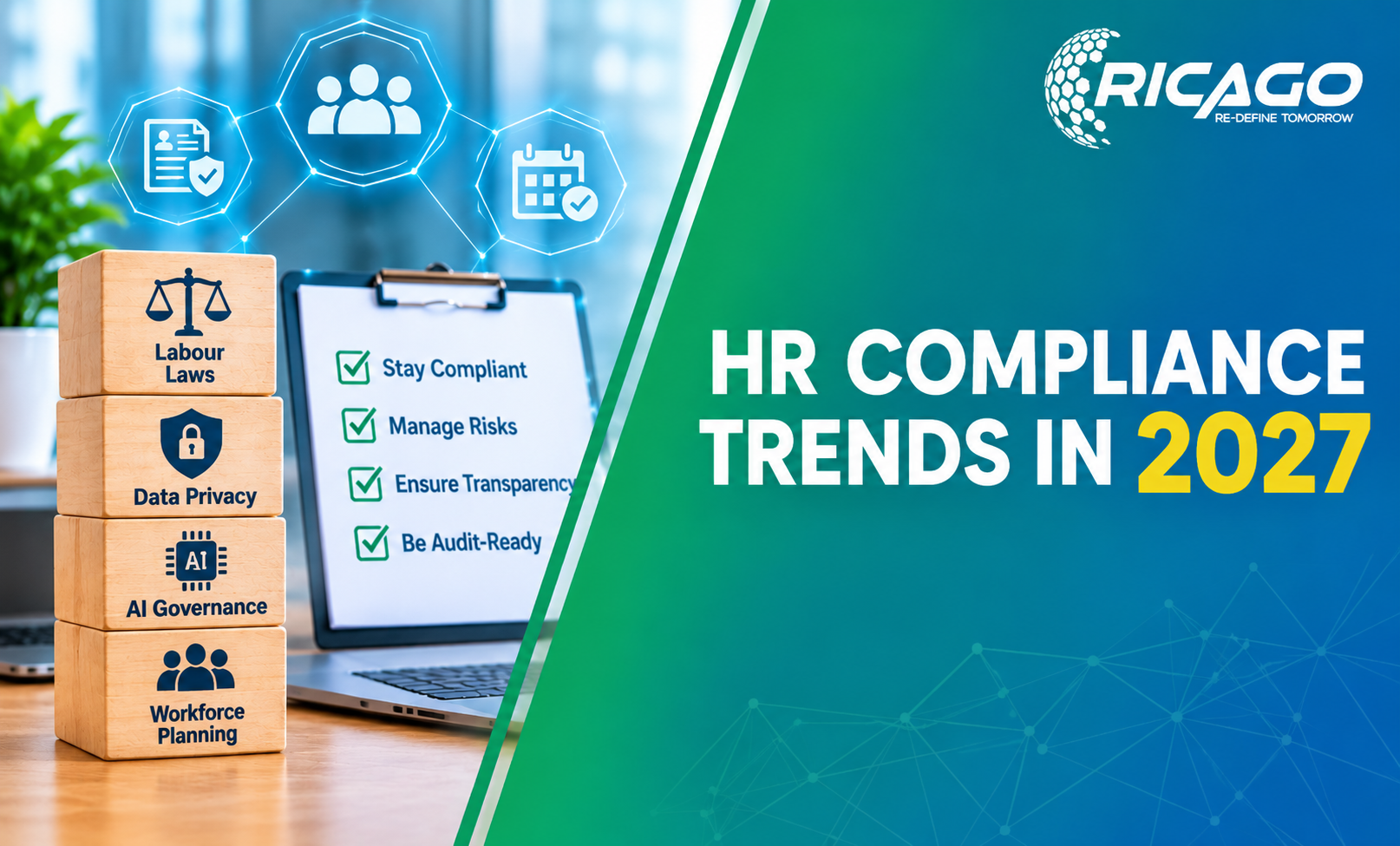
HR compliance in 2027 is no longer about tracking one new law at a time. Labour rules, data privacy obligations and AI governance are arriving together, and regulators, auditors and employees will expect you to show control, not just intent.
If your leave policies, employee data practices and HR automation still live across spreadsheets, emails and individual inboxes, this is the year the gaps become visible. Here are four trends to plan around, and a practical way to prepare.
Most organisations now have an AI strategy. Far fewer can prove it pays off. KPMG's Q1 2026 Global AI Pulse reported that 95% of surveyed organisations had an AI strategy, but only 8% had established ROI.
For HR, the compliance angle matters as much as productivity. When AI screens candidates, answers policy questions or automates payroll checks, someone must be able to explain what it does, who reviews its output and what happens when it is wrong.
Action: Document every AI-enabled HR process, name an owner and define where a human stays in the loop.
India's labour codes consolidate many older laws, but employers still work with state rules, industry-specific requirements and internal policies that interact in different ways. For multi-location employers, the challenge is no longer reading each rule. It is knowing which obligation applies to which site, and who owns it.
The four Labour Codes are:
Leave, working hours, wages and social security are common pressure points, and they force HR, payroll and legal teams to coordinate.
Action: Map each obligation to a location, an owner and a due date, and review the map whenever rules or policies change.
Employee records hold some of the most sensitive data a company owns: identity documents, bank details, health information and performance history. India's Digital Personal Data Protection Act, 2023 is being phased in through its rules, and group companies and global customers increasingly ask suppliers how they handle personal data.
Compliance starts with knowing what data you hold, why you hold it, who can access it and how long you keep it.
Action: Inventory employee data flows, review vendor access, and record retention and consent decisions in one place.
As businesses work with multiple vendors and contractors, maintaining compliance across the supply chain becomes an important part of business operations. Organisations need visibility into vendor documents, statutory records, audit findings and pending corrective actions.
A structured vendor audit process helps businesses verify compliance, improve transparency and maintain oversight of contractor and supplier activities.
Action: Establish a regular vendor audit process with documented checkpoints, verified records and tracked follow-up actions. Ricago AMS+ helps streamline vendor audits through audit scheduling, document verification, workflow management and real-time status reporting.
These four trends share one pattern: obligations multiply, ownership blurs and evidence goes missing. A proactive HR compliance process connects every obligation to an owner, a deadline, an action and supporting proof. At minimum, it should:
Ricago Labour Compliance Services (LCS) helps businesses manage PF, ESI, statutory filings, registrations, licence renewals and labour audits with expert support. Ricago Audit Management System (AMS) streamlines vendor and contractor audits through audit scheduling, document management and status tracking.
Together, LCS and AMS help replace scattered spreadsheets with structured compliance records, clear responsibilities and accessible supporting evidence, giving your team better visibility and control over compliance activities.
Connect with Ricago to simplify labour compliance and strengthen vendor audit management.
Book a personalised demo of Ricago LCS and AMS.
What are the biggest HR compliance trends for 2027? AI governance with human oversight, more layered employment law, employee data privacy and vendor audit management.
How can HR teams prepare for 2027 compliance changes? Build a central register of obligations, assign owners and deadlines, and keep evidence attached to each task.
What is HR compliance management software? Software that centralises obligations, deadlines, ownership and evidence so teams can monitor status and respond to audits.
How can we stop tracking HR compliance in spreadsheets and emails? Ricago CMS puts your obligations, owners, deadlines and supporting evidence in one place, with automated reminders and workflow tracking for pending actions. Status views across business units show who is behind before an audit does. Book a personalised demo to see it with your own use case.