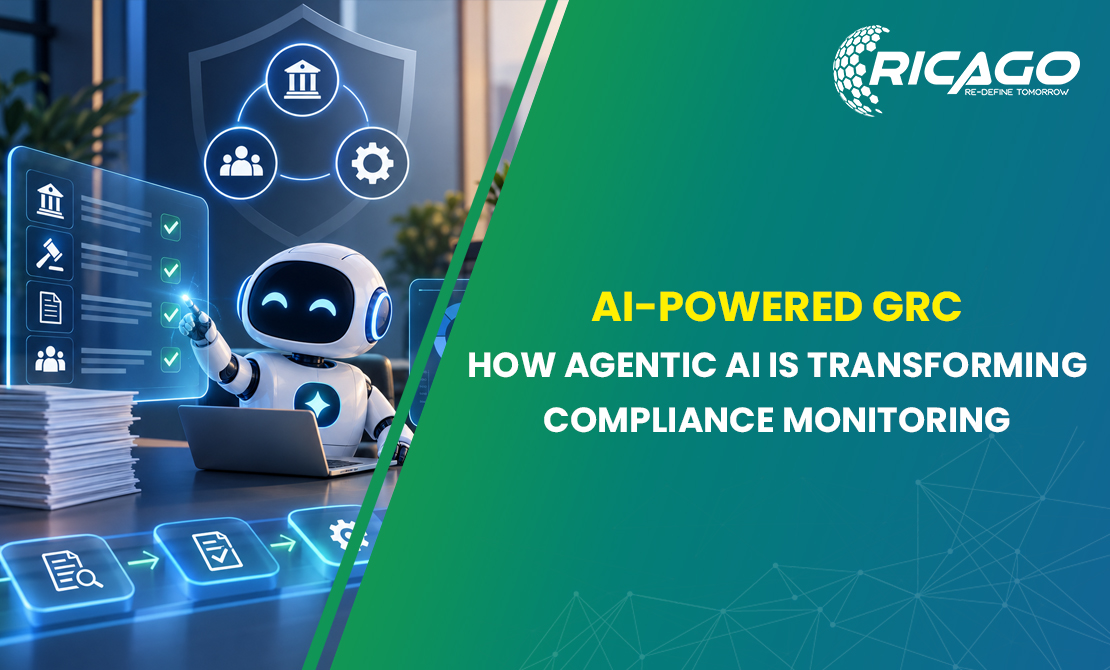
AI-powered GRC is shifting compliance from periodic reviews to continuous, agentic monitoring—helping organizations detect risks earlier while keeping human governance at the center.
For the better part of a decade, GRC technology has meant one thing above all else: dashboards. Risk heat maps, compliance scorecards, audit status trackers all beautifully visualized, all built to answer the same question after the fact: what happened?
In 2026, that question is changing. Leading GRC industry voices are identifying agentic GRC as a defining trend for 2026. MetricStream, for example, lists ‘Agentic GRC, with Human Governance’ among its top GRC trends for the year.
For compliance and risk leaders, this isn't a minor upgrade. It's a fundamentally different operating model.
The Hidden Risks of Periodic Compliance
Traditional GRC programs run on a rhythm of checkpoints: monthly filings, quarterly audits, annual risk assessments. Between those checkpoints, organizations are often flying blind. A missed statutory deadline, a lapsed license, or a control that quietly stopped working might not surface until the next scheduled review by which point the exposure has already existed for weeks or months.
This lag is exactly the vulnerability that regulators, boards, and auditors are losing patience with. As compliance obligations multiply across labour codes, data protection law, and sector-specific regulations, "we'll catch it at the next audit" is no longer an acceptable risk posture.
What Is AI GRC? How AI Agents Are Changing Compliance Management
Agentic GRC doesn't replace human oversight it changes what humans spend their time on. Instead of a compliance officer manually checking twenty different registers, portals, and filing calendars every week, AI agents continuously:
The result is a shift from periodic assurance to continuous assurance governance that keeps pace with the business instead of trailing behind it.
Automated Compliance Monitoring: The Next Evolution of GRC
This shift isn't happening in a vacuum. Indian businesses are navigating the rollout of four new Labour Codes, evolving DPDP Act enforcement, and state-specific rules that change on different timelines depending on where you operate. Manually tracking this complexity across multiple states and multiple regulatory regimes is precisely the kind of task that breaks down under a periodic-review model and precisely where agentic monitoring adds the most value.
An AI agent that already knows your registration details, applicable acts, and filing calendar can flag a new state notification, map it to your specific obligations, and tell you what changed - before your compliance calendar even needs to be manually updated.
Consider professional tax alone: an organization operating in Karnataka, Maharashtra, Telangana, and West Bengal is juggling four different remittance schedules, four different return formats, and four sets of penalty provisions if a date slips. Multiply that across labour, tax, and sector-specific regulations, and it becomes clear why "someone will notice" is not a control it's a hope. Agentic monitoring turns that hope into a system.
AI and Compliance: Why Human Governance Still Leads
It's worth being direct about what agentic GRC is not: it isn't a compliance officer replacement. Every credible 2026 forecast on this topic MetricStream's included pairs "agentic" with a second, equally important word: governed. Agents monitor and flag; people still decide, interpret regulatory intent, and take accountability. The technology's value is in eliminating the lag between "something went wrong" and "someone found out," not in removing human judgment from the process.
Organizations that get this balance right are the ones that treat AI agents as an extension of their compliance team's visibility not a substitute for its expertise.
Ready for AI Compliance? Here’s Where to Start
You don't need to overhaul your entire GRC stack overnight to start benefiting from this shift. A practical starting point is auditing where your current compliance process still depends on someone remembering to check something a renewal date, a filing deadline, a policy update. Those are exactly the gaps continuous, AI-assisted monitoring is built to close first.
Ready to move from periodic compliance checks to continuous monitoring? Talk to Ricago about bringing AI compliance tracking into your GRC program.